Article
Will Lifting Weights Make You Bulky? How Women Actually Build Lean Muscle
By Samantha Hobley · Last updated 18 June 2026
Lean muscle, not bulk. Will lifting weights make me bulky? No. Perth coach Samantha Hobley explains how women actually build lean muscle and lose fat.
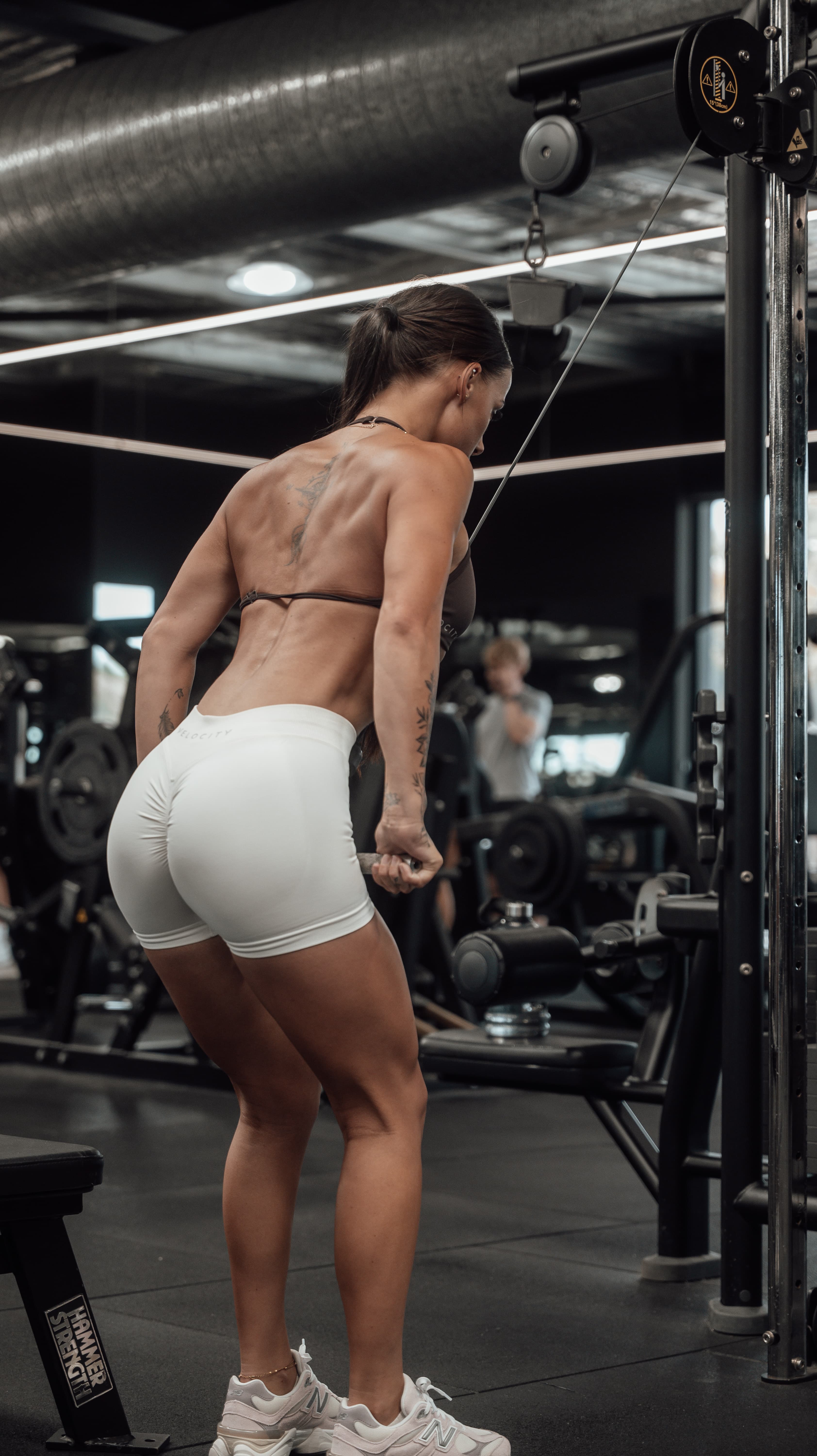
Will lifting weights make you bulky? No. And I can tell you that from the inside, not just from the research.
When I started lifting, I honestly was not worried about getting bulky, because I did not believe I would stick to it. But once I became consistent, something changed. I fell in love with the way training made my body feel and move. I was not getting bulky at all. I was losing body fat and getting stronger at the same time, and within a couple of months I had more energy and less brain fog than I had felt in years.
I am Samantha Hobley, a personal trainer in Perth. I hold a Certificate IV in Fitness, and I help women get strong. The fear of bulking up is the single most common reason women tell me they will not pick up a weight. So here is the honest version of what actually happens to a woman's body when she trains.
What "lean muscle" actually means
Lean muscle is just muscle. The word "lean" gets added because women picture two very different things when they hear "muscle": the strong, defined shape they want, and the heavy, bulky look they fear. Those are not two different tissues. They are the same muscle at different levels of size and body fat.
When someone says they want to look "toned," what they are describing is a bit of muscle with low enough body fat to see its shape. That is lean muscle. So "lean muscle" and "toned" are the same goal, and lifting is how you get there.
Why women do not get bulky
This is the part the fear gets wrong, and the biology is clear.
The hormone that drives large, bulky muscle is testosterone, and women have far less of it than men. Research puts the gap somewhere in the order of ten to twenty times lower. That single fact is why the big, heavily muscled look does not happen to women by accident. Women still build real muscle and real strength, but the runaway size men can reach is simply not on the table for a woman training a few times a week. It is the same reason lifting will not make you look manly. Testosterone is what drives those masculine features, and women carry so little of it that what you build is a leaner, stronger, more defined version of your own shape, never a masculine one. And if you have ever thought you might be one of the women who builds muscle more easily than most, the same biology still applies to you. Feeling like you gain muscle quickly is not the same as having the hormones to carry it all the way to bulky. That ceiling is the same for every woman, including you.
The second reason is time. Muscle is slow to build. The changes came in slowly over months, not weeks, which I will walk you through below. You cannot wake up bulky after a fortnight of lifting any more than you can wake up able to run a marathon. That slow pace is its own safety net.
So what about the very muscular women you see online? They are not a preview of what a few months of lifting does. They have usually trained hard for many years, they eat a great deal to support that size, and at the most extreme end many use anabolic steroids or other performance-enhancing drugs, which is what makes that level of muscle possible. That is a completely different thing from a woman who lifts to get strong and lean. Comparing yourself to it is like worrying that a few driving lessons will turn you into a Formula 1 driver.
My own result is the proof I trust most: I leaned out, I got stronger, and I never came close to bulky. Researchers call losing fat and building muscle at the same time "body recomposition," and a 2020 research review confirmed it is genuinely possible, especially for women who are newer to training. That was exactly my experience.
The "toning" myth
You have probably been sold the idea that women should "tone" while men "build." It is a myth that quietly holds a lot of women back. There is no toning exercise that shapes a muscle without building it. The lean, defined look comes from the same two things every time: a bit more muscle, a bit less fat. Light pink dumbbells and endless reps are not a gentler path to that, just a slower one.
The honest message is freeing once it lands: you do not have to be careful not to build muscle. Building muscle is the thing you actually want. It is what creates the shape, and it is also what makes you capable.
How women actually build lean muscle
The method is simpler than the internet makes it look. Four things, in order of importance.
- Lift with progressive overload. This just means making the work a little harder over time, by lifting a bit more weight or doing a bit more than last time. That gradual challenge is the single biggest driver of building muscle. Comfortable never changes a body.
- Eat enough, with enough protein. You cannot build muscle out of thin air. Prioritise protein, and eat enough overall to support your training rather than under-eating. Eating enough to fuel training is not the same as overeating, and because you can build muscle while losing fat, feeding your training supports the leaner result rather than working against it. I keep the actual numbers off this page on purpose, because they are personal. If you want a starting point for your own, use our calorie calculator.
- Train consistently. Two to three strength sessions a week, repeated for months, beats a perfect plan you only follow for a fortnight. Consistency was the thing that changed everything for me, and it was also the thing I doubted I had in me.
- Be patient. Muscle is built slowly, which is exactly why you will not overshoot into bulky. Trust the process and let it compound.
How long it takes, and what to expect
Here is my real timeline, because it tells you the truth better than any promise.
When I trained consistently, I noticed the first changes at around eight weeks. They were small but real: better energy, less brain fog, and my strength starting to creep up. The scale did not really move until after about two months. And it was not until a good four to five months in that I saw real muscle definition coming through.
Notice the order. The way I felt changed long before the way I looked did. More energy, a clearer head, more confidence. Strength work is known to lift mood and energy, and for me those wins arrived first and kept me going while the visible changes took their time. If you judge it only by the mirror in week three, you will quit right before the good part. Judge it by how you feel and how your strength is moving.
From the machines to the barbell
One of the clearest signs my body had changed was how ordinary life got easier. Everyday tasks stopped feeling like effort, because my body could do more and keep up with the day. You notice it carrying all the shopping in from the car in one trip, or swinging your own case into the overhead locker without a second thought.
I remember the moment I walked away from the pin-loaded machines and stood in front of a barbell for the first time. I was nervous, because a machine tells you what to do and a barbell does not. There were no instructions. What I learned is that free weights are worth that small leap, because they ask your whole body to stabilise and that is where real, usable strength comes from.
That step is also where a lot of women feel stuck, and it is where a coach earns their place: someone to show you the movements, keep you safe, and take the guesswork out of it. It is the kind of coaching I do, in person at Doherty's Gym in Perth and online across Australia. If you want to see how that works, you can explore the coaching options here. And if you would rather build a base at home first, start with the resistance bands guide and come back to the barbell when you are ready.
Common mistakes to avoid
- Comparing yourself to enhanced physiques. The extreme size online usually involves years of training, very high food intake, and often drugs. It is not your future from lifting a few times a week.
- Lifting too light to avoid "bulking." Easy weights you never progress will not make you bulky, but they will not change much either. You have to gradually make it harder.
- Judging only by the scale. When you build muscle and lose fat at once, the scale can barely move while your body changes underneath it. Track how your clothes fit, your strength and your energy too.
You do not have to walk in and grab the heaviest weight in the room tomorrow. Start lighter than you think, a few times a week, and let it build. The energy, the clearer head and the strength all come from showing up consistently, not from being brave all at once. That is the part I can promise you, because it is exactly how I started too.
Frequently Asked Questions
No. Bulky muscle is driven by testosterone, and women carry far less of it than men, in the order of ten to twenty times less. Muscle is also slow to build. The strong, lean, defined look most women want is exactly what lifting produces. The extreme size sometimes seen online usually involves years of training, very high food intake, and often performance-enhancing drugs.
Slower than most people hope, which is good news if you fear getting bulky. In my own experience, energy and focus improved at around eight weeks, the scale moved after about two months, and visible definition came through at roughly four to five months of consistent training. The feeling of being stronger arrives well before the look does.
No. Women's testosterone sits roughly ten to twenty times lower than men's, which is the main reason the bulky look does not happen without years of dedicated training and, at the extreme end, drugs. Women build real strength and lean muscle, just not runaway size.
Yes. It is called body recomposition, and the research supports it, especially for women new to training or returning after a break. The scale may stay still while your body gets leaner and stronger underneath, so track more than your weight.
You need to lift hard enough that the last couple of repetitions are a real effort, and you need to make it gradually harder over time. That can start light and build. The principle that matters is progressive overload, not chasing a heavy number on day one.